

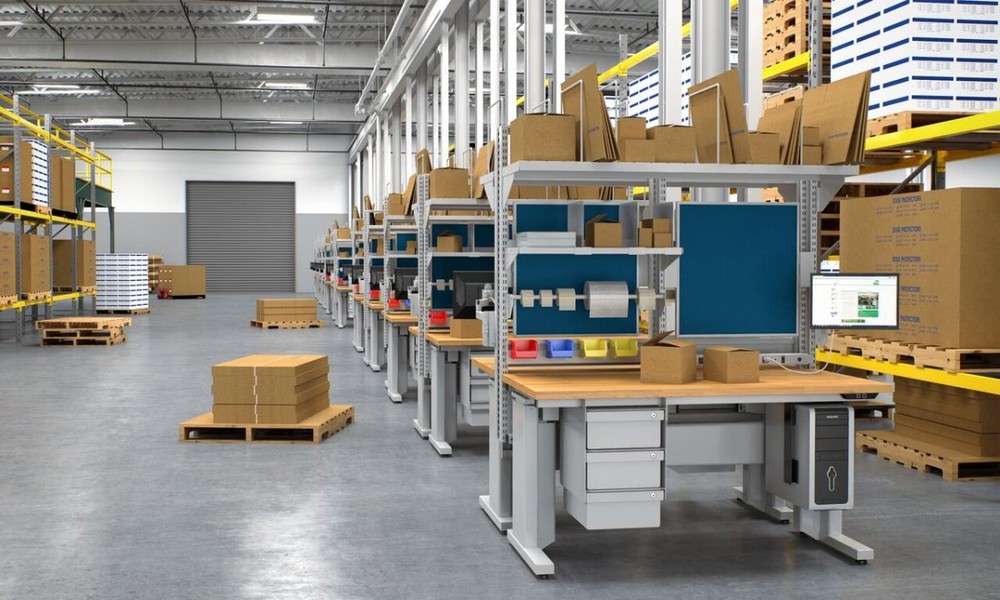
Manual packaging and palletizing operations represent some of the most physically demanding tasks in a modern production facility. Workers in these zones frequently perform repetitive movements, lift heavy loads, and maintain awkward postures for extended periods. For production and maintenance managers, addressing these ergonomic challenges is not just a matter of compliance or worker well-being; it directly impacts the bottom line through reduced turnover, fewer injury-related absences, and consistent throughput.
Physical Stress Factors in Traditional Packaging
The repetitive nature of manual handling leads to cumulative trauma. When an operator spends eight hours a day twisting their torso to move a box from a conveyor to a pallet, the risk of musculoskeletal disorders (MSDs) increases exponentially. These injuries often develop silently over months before resulting in a significant medical claim or a sudden drop in line efficiency.
Beyond the weight of the items, the frequency of the movement is a critical risk factor. High-speed lines require workers to move at a pace that often compromises form. Once fatigue sets in, the precision of movement drops, leading to dropped products, damaged packaging, and potential workplace accidents. Analyzing the height of the conveyor relative to the worker’s waist and the reach distance required to place an item is the first step in identifying “red zone” tasks.
Environmental and Spatial Adjustments
Improving ergonomics often starts with the layout of the workstation. Adjustable-height conveyors allow operators of different statures to work in a neutral posture, preventing unnecessary strain on the lower back and neck. Utilizing gravity-fed rollers can also minimize the force required to slide heavy boxes, shifting the effort from a lift to a controlled push.
Lighting and floor surfaces also play a secondary but vital role. Anti-fatigue matting reduces the impact on joints for staff who stand on concrete floors all day. Proper illumination ensures that workers do not have to lean forward or squint to read labels or check seals, which helps maintain a healthy spinal alignment throughout the shift.
Automation as an Ergonomic Tool
When the physical demands of a task exceed safe human limits, technology provides a sustainable bridge. Integrating collaborative robots (cobots) allows facilities to offload the most taxing elements of the packaging process. Instead of a human handling every single carton, a cobot can manage the heavy lifting and high-frequency stacking, while the human worker transitions into a supervisory role, managing the flow of materials and ensuring quality control.
Implementing a dedicated automated palletizing system simplifies the transition from manual to assisted labor by providing a standardized way to handle varying box sizes and stacking patterns. These systems are designed to operate alongside humans, filling the gap where manual labor becomes a liability. By delegating the repetitive “pick and place” motions to a machine, the risk of repetitive strain injury is virtually eliminated for that specific stage of the process.
Skill Shifts and Maintenance Considerations
Shifting from manual labor to automated support requires a change in how maintenance and production teams view the packaging line. Automation engineers must ensure that the hand-off points between human and machine are seamless. If a worker has to awkwardly reach around a robot safety guard to clear a jam, a new ergonomic hazard has been created.
Maintenance managers should prioritize the upkeep of vacuum grippers and mechanical sensors. A malfunctioning gripper that requires manual intervention defeats the purpose of the ergonomic upgrade. Keeping these systems calibrated ensures that the “heavy lifting” remains automated, allowing the workforce to focus on high-level tasks that require human intuition rather than raw physical exertion.
Long-term Impact on Operations
A focus on ergonomics transforms the packaging area from a high-turnover department into a stable, efficient part of the plant. When workers are not physically exhausted by midday, their attention to detail remains sharp. This leads to fewer shipping errors and a higher standard of final product presentation.
Data-driven decision-making helps refine these processes further. By tracking the frequency of “near-miss” incidents or minor strain complaints, managers can pinpoint which specific movements are still causing friction. Ergonomics is a continuous improvement cycle, much like Lean or Six Sigma, where small adjustments to reach distances and lift heights yield significant gains in total system reliability.
